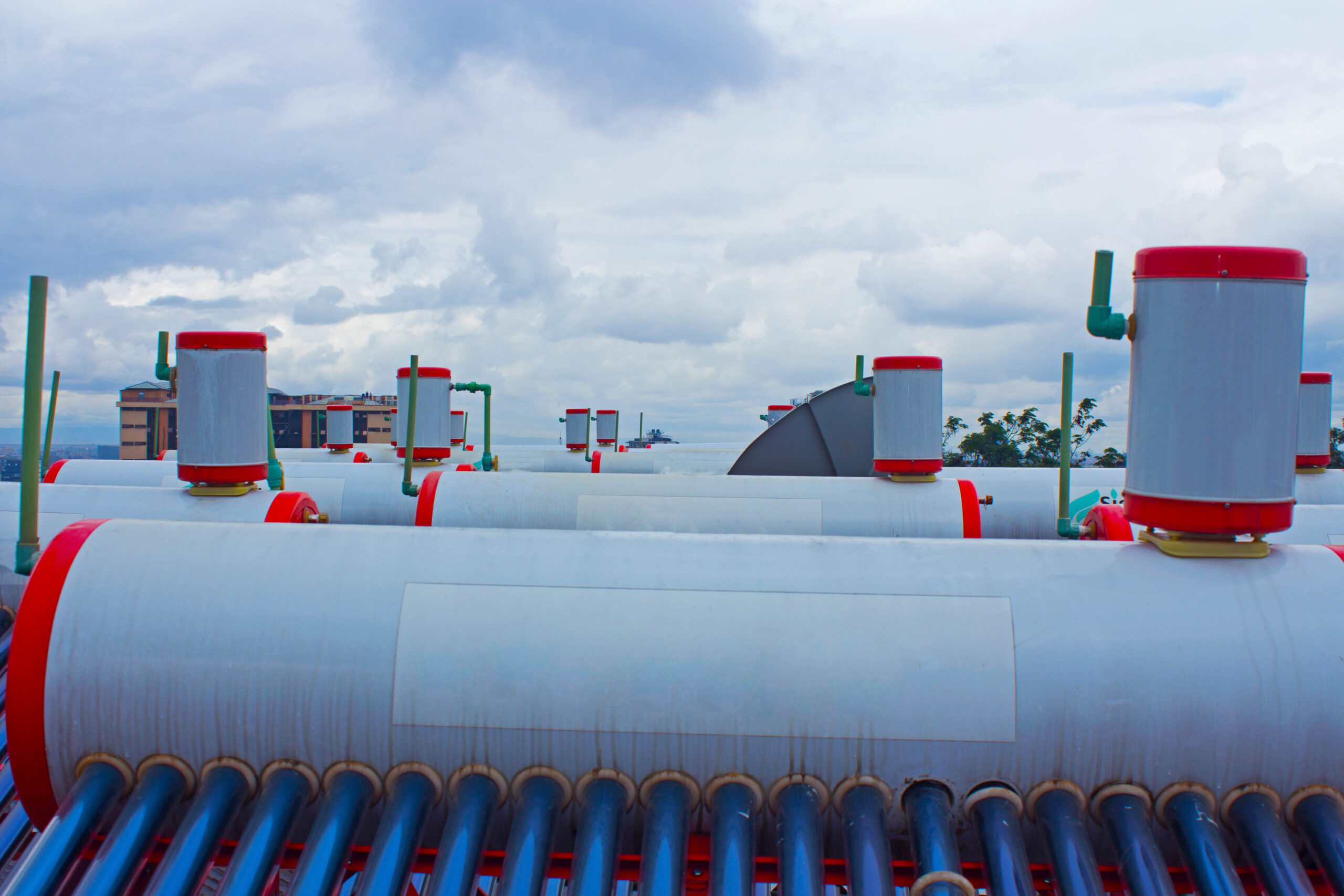
Solar water heater
A solar water heater turns cold water into hot water with the help of sun rays. Around 60 to 80°C of hot water can be attained depending on solar radiation, weather conditions, and solar collection system efficiency.
They are used to heat water for houses, hotels, hospitals, restaurants, dairy industry, etc.
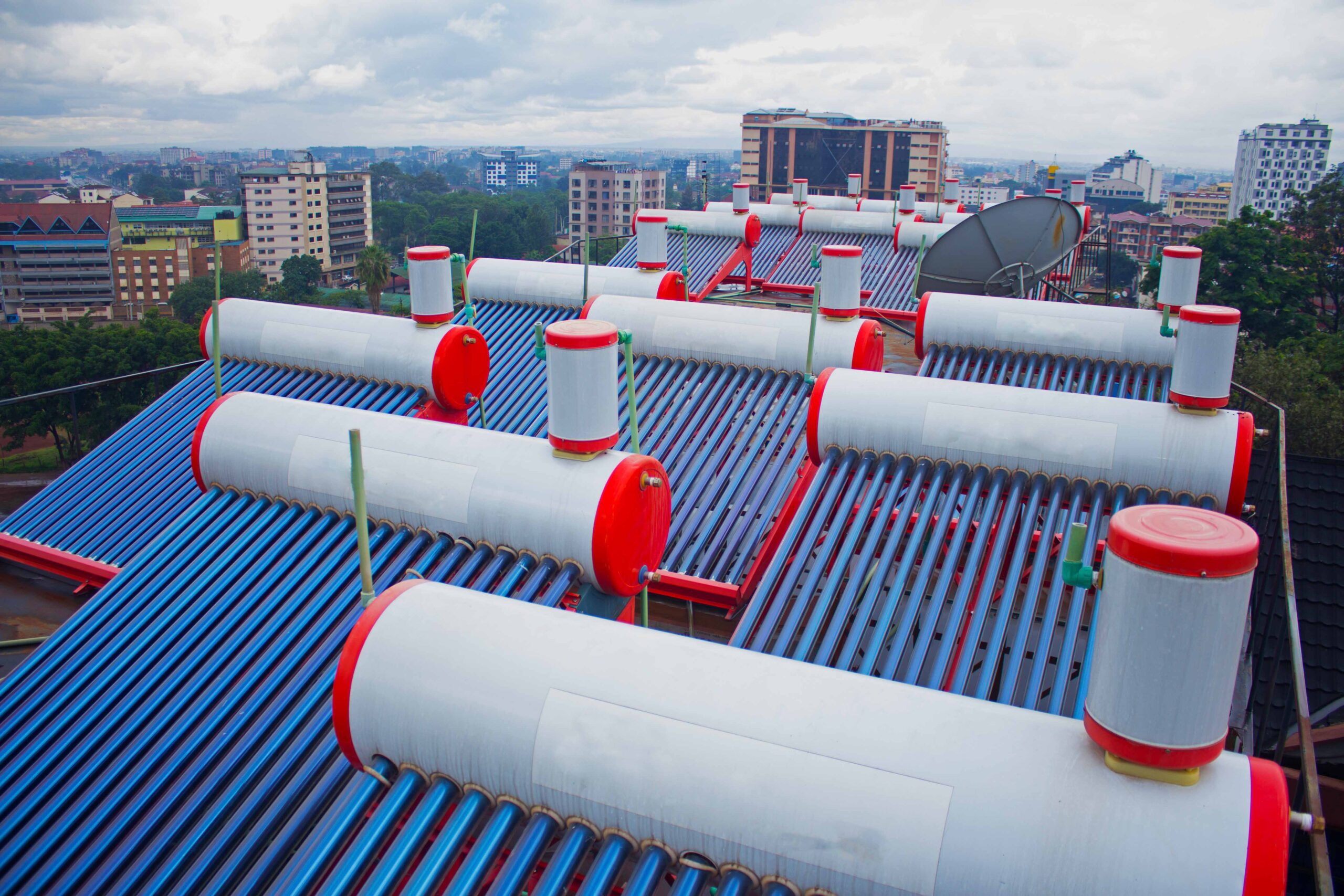
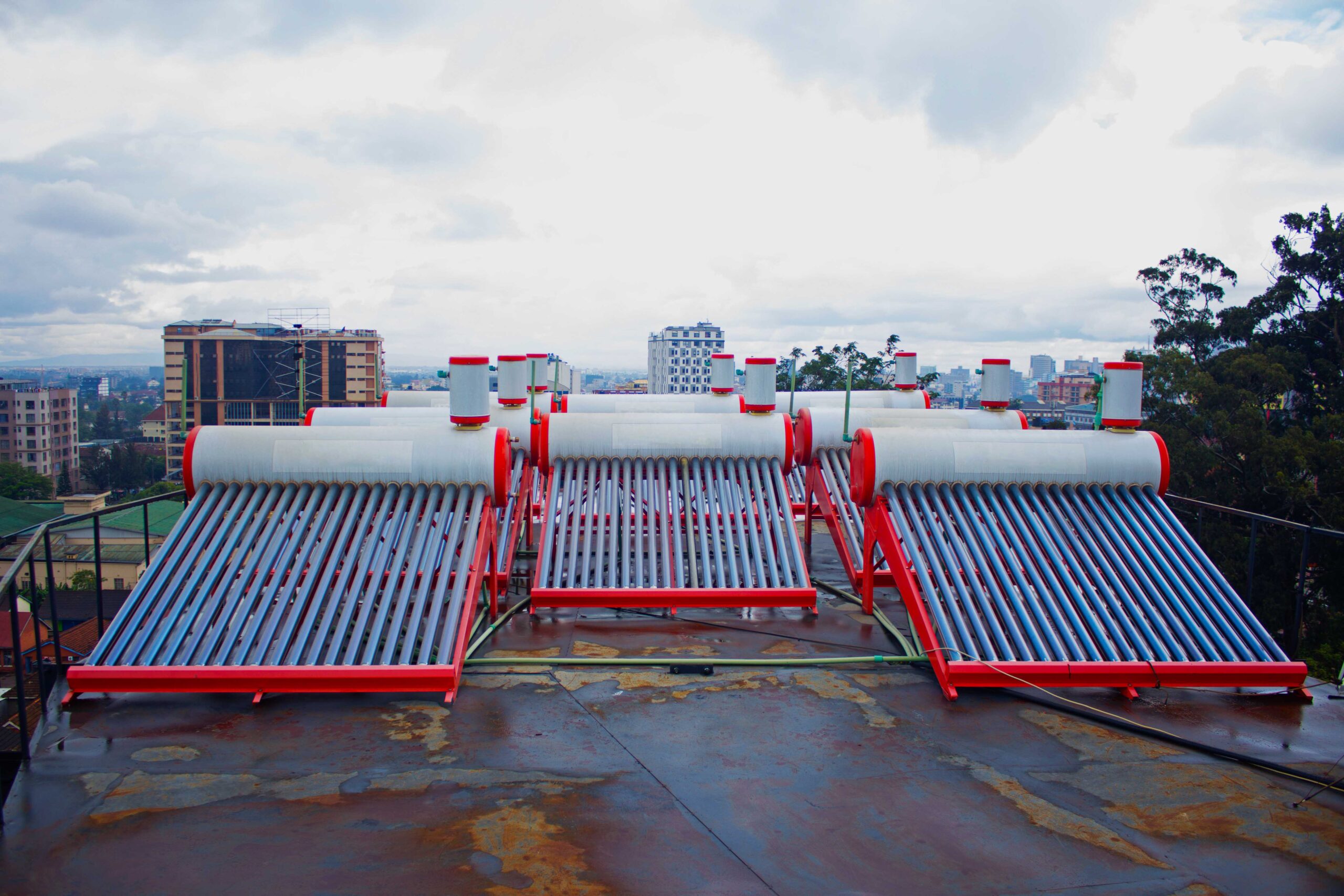
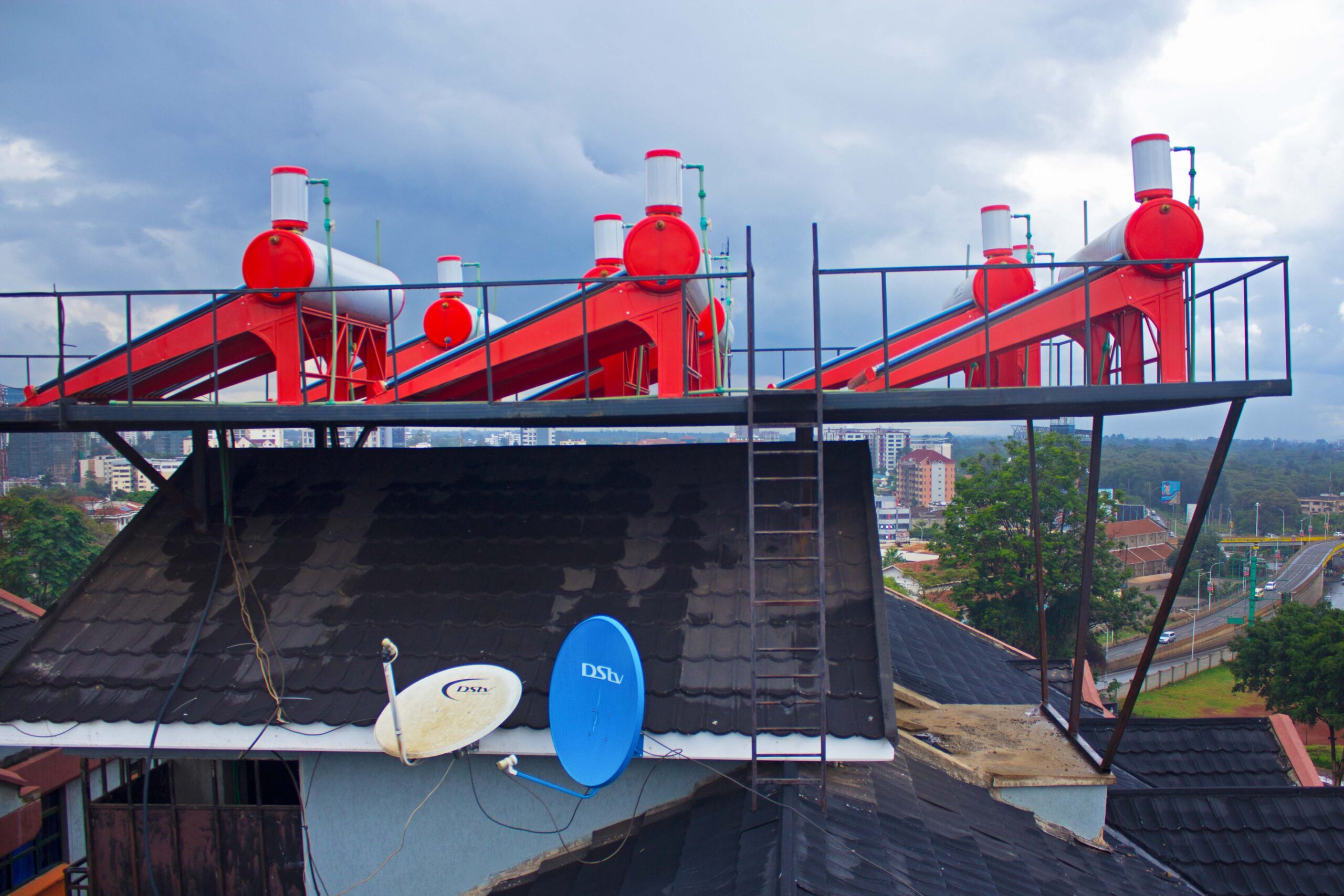
Solar water heaters are installed on rooftops, building terraces, and open ground where there is no shading, facing the sunset and being fed with water directly from the main supplier, using an overhead tank or through pumping.
They will generate hot water on clear sunny days [maximum], partially cloudy days [moderate], but not in rainy days or heavy overcast days [they have a back up for these periods ].
There are specific systems for soft and portable water and other specific for hard water.
Stainless steel is used for small tanks and mild steel for large tanks.
Solar water heater tanks are insulated and keep water hot for 72 hours. 200 to 300 ltr. capacity are used in domestic settings, while large capacities are used in restaurants, guest houses, hotels, hospitals, etc.
To have a solar water heater system installed, the house should have a spacious roof facing the sunset, sunset because the afternoon sun is longer and hotter, double plumbing should be done in the house, that is the cold and hot water plumbing and also have a source of water to supply the solar system with cold water, Water supply can either be from an elevated tank or an automated pump.
Solar water heating systems come in two capacities, the 200-litre capacity which serves 5 people and below or 3 bathrooms and below or a bungalow.
There is also a 300litre capacity that serves 5-10 people, 3-4 bathrooms and a mansion-house.
In some house two or more systems might be required depending on the size of the house, consumption in kitchen etc.
Larger capacities are also available for commercial use i.e. schools, Hotels, factories etc.
- Tank
- Collector
- Frame
- Assistant tank
- Booster elements
- Control systems
- Material
Solar Storage tank
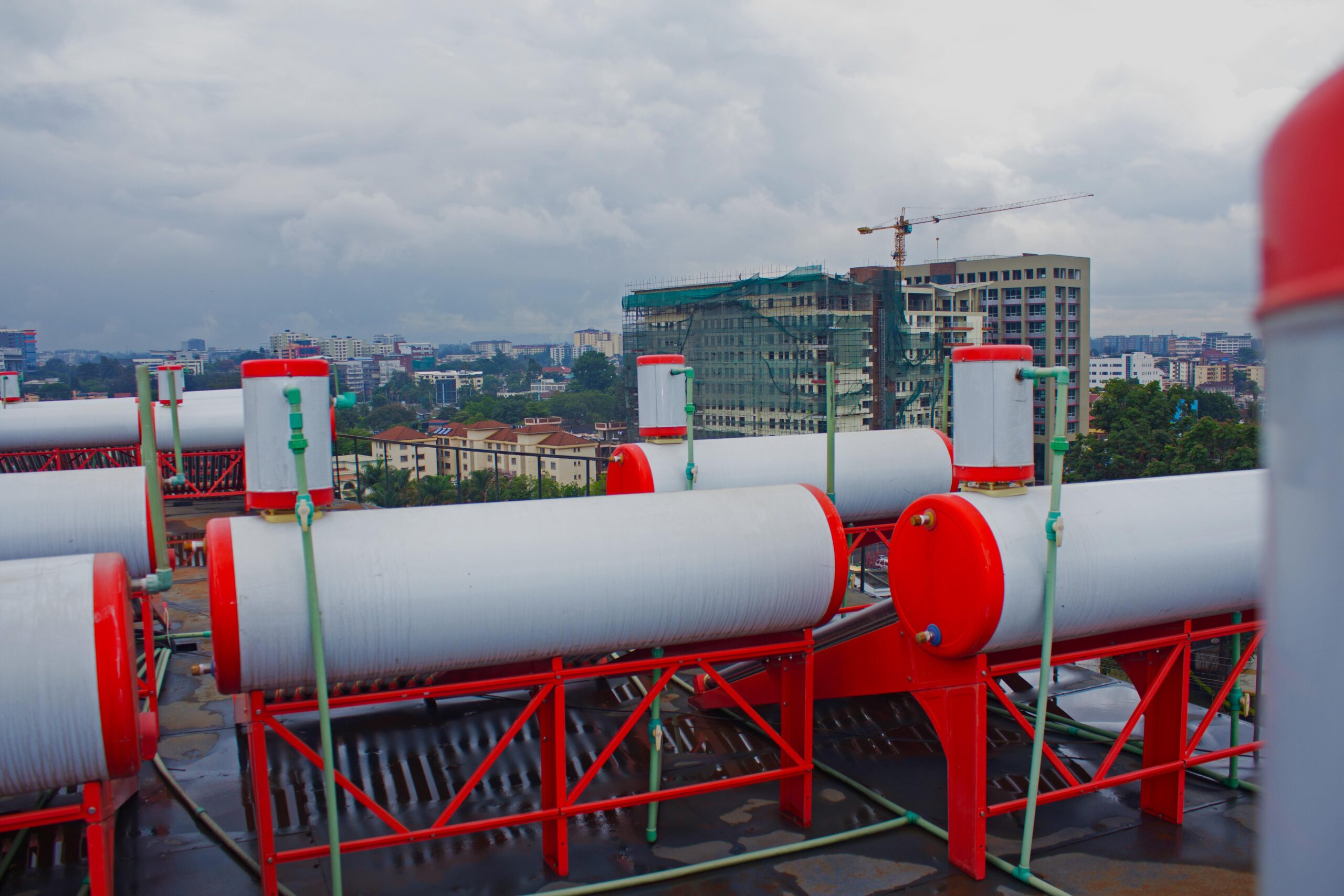
Storage tank – The solar water heating tank comprises of the following parts:
- Inner Tank
The inner tank is the chamber where hot water is stored. It is manufactured from high-grade stainless steel or food-grade steel, ensuring excellent durability, corrosion resistance, and water safety. Because stainless steel does not rust, the inner tank offers a long service life and reliable performance. - Outer Tank
The outer tank encloses and protects the inner tank and other internal components. It is constructed from thick stainless steel or high-quality coated steel, providing protection against rust, humidity, harsh weather conditions, and prolonged exposure to sunlight. - Insulation Layer
The storage tank is heavily insulated to minimize heat loss and keep water hot for up to 72 hours. The space between the inner and outer tanks is filled with high-density polyurethane foam, a premium insulating material that ensures maximum heat retention and improved energy efficiency. - Booster Heating Element
For periods when solar energy is insufficient, such as during cloudy weather or at night, the system may be fitted with a backup electric booster element. This feature heats the water to the desired temperature, ensuring a continuous supply of hot water regardless of weather conditions
Collector
The collector is where the water is heated using radiation before it stored in the tank. There are two types of collectors:
Collectors – flat plates collectors [fpc] based solar water heaters. The solar radiation is absorbed by flat plate collectors which consist of an insulated outer metallic box covered on the top with glass sheet. Inside there are blackened metallic absorber [selectively coated] sheets with built in channels or riser tubes to carry water. The absorber absorbs the solar radiation and transfers the heat to the flowing water.
Frame
The purpose of the frame is to hold a tank and tubes together on the roof.
The assistant tank is a 7 – 9 ltr. tank that is fixed on the solar water heater tank on the inlet. It has an inlet from the water source , an outlet to feed the swh tank and a ball valve to shut the water from going into the swh tank when its full avoiding overflow.
Booster elements
This is an electric back up filled in the swh tank which boosts the water temperature to the desired temperature when the temperature of the solar heater water is less than the desired temperature. This may happen in varying very cloudy days.
Control system
A control system is a visual panel installed inside the house. The control has a display which relays the degrees of water in the swh tank. It is also used to turn the booster element on and off when the degrees of water inside swh tank reach the desired degrees.
Evacuated Tube Solar Water Heating Systems
The evacuated tube solar water heating system is the most suitable and widely used technology for Kenyan weather conditions. It is highly efficient in harnessing solar energy, even during cloudy or cooler days, making it an ideal choice for homes, apartments, hotels, schools, and commercial establishments.
Evacuated tube systems are broadly classified into two categories:
- Non-Pressurized Solar Water Heating System
- Suitable for areas with a reliable overhead water storage tank.
- Operates using gravity-fed water supply.
- Cost-effective and easy to install.
- Ideal for residential homes with moderate hot water requirements.
- Pressurized Solar Water Heating System
- Designed to deliver hot water at mains water pressure.
- Provides stronger and more consistent water flow through showers and taps.
- Suitable for modern homes, apartments, hotels, hospitals, and commercial buildings.
- Can operate effectively even in buildings without elevated water storage tanks.
Choosing the right system depends on your water pressure requirements, building design, and daily hot water consumption. Our team can help you select the most suitable solution for your specific needs.
Economic Benefits of Solar Water Heating
Reduce Electricity Consumption and Lower Energy Bills
Many homeowners choose electric water heaters because they are relatively inexpensive to purchase and easy to install. However, studies show that water heating can account for up to 55% of a household’s electricity consumption, making it one of the largest contributors to monthly energy bills.
When considering a water heating solution, it is important to look beyond the initial purchase price and evaluate the total lifetime cost of ownership. While solar water heaters typically require a higher initial investment than electric water heaters, they offer substantial long-term savings through reduced electricity consumption.
Research has shown that solar water heating systems can reduce water heating energy costs by 50% to 85%, depending on system size, usage patterns, and solar conditions. As a result, homeowners can enjoy significant annual savings on their electricity bills while benefiting from a reliable supply of hot water.
Long-Term Cost Savings
The installed cost of a quality solar water heating system in Kenya typically ranges from KSh 100,000 to KSh 130,000, while a conventional electric water heater may cost between KSh 50,000 and KSh 90,000. Although the initial investment for solar technology is higher, the operating costs are significantly lower because the primary energy source—sunshine—is free.
Depending on local electricity tariffs and hot water usage, a properly designed and professionally installed solar water heater can achieve a payback period of approximately 3 to 8 years. After the payback period, the system continues to generate savings throughout its operational life, which can range from 15 to 40 years with proper maintenance.
Example Savings Calculation
Consider a household with an average monthly electricity bill of KSh 10,000, where approximately 55% (KSh 5,500) is spent on water heating.
If the homeowner installs a solar water heater costing KSh 130,000, and the system provides 80% of the household’s annual hot water needs, the savings would be:
- Monthly savings: KSh 5,500 × 80% = KSh 4,400
- Annual savings: KSh 4,400 × 12 = KSh 52,800
Simple Payback Period:
- KSh 130,000 ÷ KSh 52,800 = 2.46 years
This means the investment can be recovered in less than three years. Thereafter, the homeowner continues to save approximately KSh 52,800 annually, subject to electricity tariff changes and usage patterns.
Maintenance costs are minimal, typically averaging KSh 4,500 every two years for routine inspection and servicing.
Product Differentiation and Added Property Value
For property developers, landlords, and real estate investors, solar water heating systems provide a valuable competitive advantage.
Installing solar water heaters:
- Enhances the market appeal of residential and commercial properties.
- Differentiates new developments from competing projects.
- Increases property value through energy-efficient features.
- Attracts environmentally conscious buyers and tenants.
- Reduces operating costs for occupants, making the property more attractive in the market.
- Demonstrates commitment to sustainable and modern building practices.
By incorporating solar water heating technology, developers and landlords can position their properties as energy-efficient, cost-effective, and future-ready investments.
Solar water heater systems lifespan
Our solar water heaters have a lifespan of more than 15 years provided the maintenance is done on time and as provided for.
Solar water heater systems payback
Solar water heaters give you a payback period of the money spent as follows considering what you are replacing 3 – 4 years when electricity is replaced, 4 – 5 years when gas is on is replaced 5 – 6 years when firewood is replaced.
Reliability and warranty
Our solar water heater comes with a 5yr warranty and more than 15 yrs lifespan.
Our solar water heater will ensure the heating of water to above 80 degrees on a sunny day
Solar water heater maintenance
Low maintenance required.
Low maintenance is required
Regular maintenance on simple systems can be as infrequent as every 3-5 years, preferably by a qualified contractor with experience and knowledge of solar water heater systems. Systems with electrical components usually require a replacement part or two after 10 years.
( IF YOU ARE CURRENTLY USING A BOILER, GEYSER OR INSTANT SHOWER)
RETROFITTING – converting conventional electric hot water systems to solar water heating systems
Before introduction of solar water heating systems, most house builders and owners were using electricity to heat water in homes, hotels, schools etc.
The two types of electric water heaters were the common instant shower and the expensive boilers.
Retrofitting means fitting your solar water heater to the existing plumbing which used to feed your boiler or your instant heater. The question remains, can this work? The answer is YES and NO depending on whether you were using an instant heater or boiler.
Retrofitting to instant shower plumbing.
Solar water heating wont work with the plumbing initially done for instant showers. This is as a result of only having one water line, the cold water line only. This can easily be rectified, fitting an extra plumbing line for the hot water is simple and our plumbers will easily help you with that.
Retrofitting to boiler plumbing
Solar water Heating will work perfectly with the plumbing which is already done for a boiler system. This means for a house already using a boiler and you want to change to Solar water Heating, YOU NEED NO EXTRA PLUMBING DONE.
N/B In some houses you might be having hot lines but you don’t know, but you can tell by checking if your house has mixer taps, if this is the case you have both lines. You can also have one of our plumbers come and verify for you.
Retrofitting hot water plumbing when installing solar connectors has the potential to significantly reduce both material and installation cost.